Thinking about adding more space, flexibility, or rental potential to your San Juan Capistrano property? An accessory dwelling unit, or ADU, can open up real options, but the path depends on your lot, your goals, and the City of San Juan Capistrano’s rules. If you want to understand what is possible in 92675, what can affect cost and timing, and what an ADU could mean for future resale, this guide will help you sort through the key points. Let’s dive in.
What an ADU means in San Juan Capistrano
An ADU is a secondary home on the same lot as your primary residence. In California, that can include a detached unit, an attached addition, or a unit created from existing space such as a garage or part of the main home.
You may also hear the term JADU, or junior accessory dwelling unit. A JADU is a smaller unit of up to 500 square feet that must be created within a single-family home and follows its own set of rules.
For many homeowners in San Juan Capistrano, the appeal is practical. An ADU can create space for extended family, offer long-term rental income, and add flexibility as your needs change over time.
Why homeowners explore ADUs
One of the biggest reasons to consider an ADU is adaptability. You may want a separate living area for family, a more private setup for guests, or a rental unit that supports your monthly costs.
ADUs in California are treated as long-term housing, not short-term lodging. That means they can be rented, but not sold separately from the main home, and rental terms must be longer than 30 days.
Another point many owners find helpful is occupancy flexibility. For ADUs created on or after January 1, 2020, San Juan Capistrano states there is no owner-occupancy requirement, while JADUs still have owner-occupancy rules in certain cases.
ADU types to consider
Converted space ADUs
A conversion often starts with existing space, such as a garage or another accessory structure. These projects can be easier to site because state law allows certain conversions without new setback requirements when the structure is converted in place.
Converted ADUs can also reduce some parking complications. In several conversion scenarios, local rules cannot require replacement parking, which can make this route more workable for some lots.
Attached ADUs
An attached ADU expands from the main house while remaining a separate dwelling. This option can work well if you want to preserve more yard area or keep utilities closer to the existing home.
Because attached units involve new construction, you still need to evaluate layout, setbacks, building design, and utility planning early. The exact review path will depend on how the project is configured.
Detached ADUs
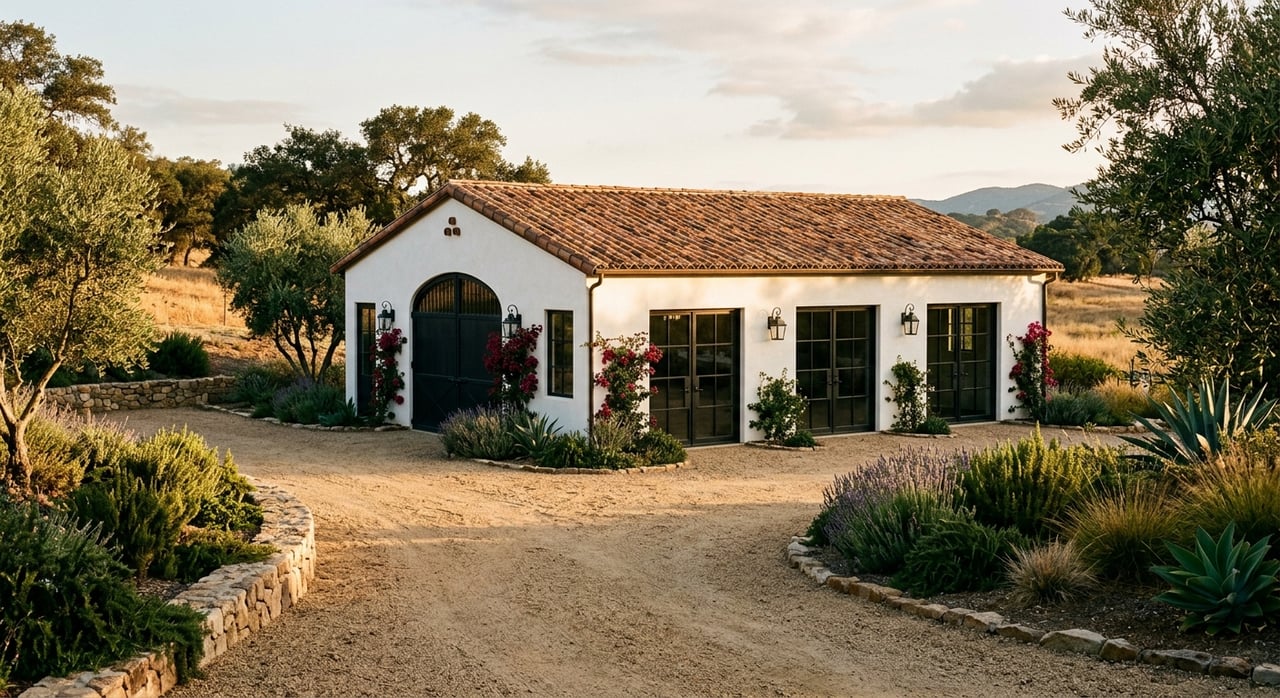
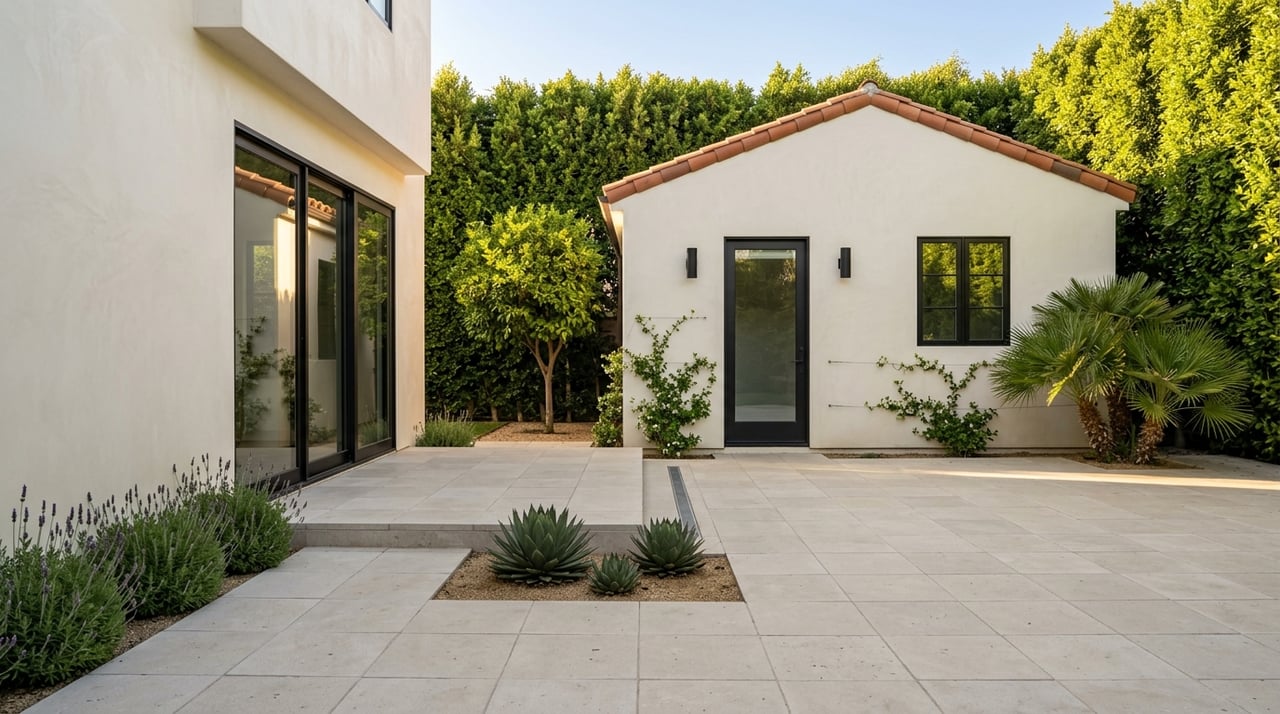
A detached ADU is a standalone unit separate from the main residence. This is often the choice homeowners picture first because it can offer the most privacy for occupants.
Under California law, detached ADUs are generally allowed up to 1,200 square feet. State rules also prevent local standards from blocking at least an 800-square-foot ADU with 4-foot side and rear setbacks.
JADUs
A JADU is smaller and must be built within the walls of an existing or proposed single-family residence. Since the maximum size is 500 square feet, this option is often best if you want to add compact living space without building a full detached unit.
JADUs come with different occupancy and design rules than standard ADUs. If you are comparing a JADU to a full ADU, it is worth reviewing the tradeoffs before you commit to plans.
San Juan Capistrano permit paths
San Juan Capistrano uses two main review tracks for ADU projects. Some projects qualify for a streamlined Building Permit Review, while others go through a separate ADU Permit Review.
The streamlined path can apply to qualifying converted ADUs or JADUs and certain new detached ADUs on single-family lots. Projects that do not fit that path are reviewed through the city’s ADU Permit Review process.
A helpful local step is the city’s concept plan review. San Juan Capistrano encourages homeowners to submit concept plans for preliminary review before filing a full permit application, which can help you catch issues earlier.
ADU applications are ministerial, which means there is no discretionary hearing or public comment process. Under the city ordinance and state framework, a complete application should be approved or denied within 60 days unless you request a delay or file the ADU with a new home on the same lot.
Key rules that shape feasibility
Size and setbacks
For many homeowners, the most important baseline is the state-protected minimum standard. California law prevents local rules from using lot coverage, floor area ratio, open space, front setbacks, or minimum lot size in a way that blocks at least 800 square feet with 4-foot side and rear setbacks.
San Juan Capistrano’s streamlined path for a new detached ADU follows that same basic 800-square-foot and 4-foot side-and-rear-setback standard. If your project goes through the city’s ADU Permit Review track, additional local standards may apply.
Those local standards can include items such as a 30-foot front setback, 0.35 lot coverage, and one off-street parking space. This is why two ADU ideas on similar lots can end up with very different design options.
Parking requirements
Parking is one of the most common ADU questions. State law limits parking to one space per ADU or per bedroom, whichever is less, and tandem parking is allowed.
In several common situations, parking can also be waived. San Juan Capistrano generally follows this framework but includes local exceptions, so it is smart to confirm how your specific lot and project type will be reviewed.
Existing structure conversions
If you are converting existing living area or an accessory structure in place, the rules can be more favorable. State law says no setback is required for these in-place conversions.
That can make conversions especially attractive on tighter lots or properties where new detached construction would be harder to fit. In many cases, this route can simplify siting compared with starting from the ground up.
Local site issues to check early
Before you spend too much time on design, it helps to review the property-specific issues that can affect timing and cost. In San Juan Capistrano, several local items can influence feasibility.
Here are some of the main ones to check early:
- HOA approval, if your property is in a homeowners association
- Floodplain status and any FEMA-related construction requirements
- Sanitation clearance through Santa Margarita Water District
- Fire-code issues and utility constraints
- Solar PV requirements for new detached ADUs
- Address assignment during the permit process
None of these automatically stops a project, but each can affect your design, budget, or schedule. Getting clarity early can save you from expensive revisions later.
Costs and fees to plan for
Your total ADU budget should include more than just construction. Design, engineering, permit fees, utility work, and financing costs can all shape the final number.
San Juan Capistrano states that no city development impact fees apply to ADUs under 750 square feet. Larger ADUs are charged proportionately, and utility connection or capacity charges may still apply depending on the project and provider.
That fee threshold can make size strategy important. For some homeowners, keeping the ADU under 750 square feet may improve the overall economics of the project.
Pre-approved plans and older unpermitted units
If you want a faster design starting point, San Juan Capistrano offers pre-approved detached ADU plans for a Boxabl Studio Casita. This can reduce some design and engineering work, although site-specific roof, foundation, and solar permits are still required.
The city also points homeowners with older unpermitted ADUs or JADUs built before January 1, 2020, to a streamlined legalization process under state law. If you already have a secondary unit on your property, this can be an important path to explore.
What an ADU may mean for value
Many homeowners ask whether an ADU will increase property value. The honest answer is that it can be value-supportive, but it is not guaranteed and the result depends on the property, the design, and buyer demand.
Recent FHFA data in California showed a higher median appraised value for Enterprise-backed single-family properties with ADUs than those without. A 2024 UC Irvine study of Los Angeles parcels also found ADU presence raised assessed value and selling price by 7 percent to 9 percent.
These numbers are best treated as directional, not as a promise for any one home in San Juan Capistrano. In the real world, resale impact often comes down to design quality, permit status, lot fit, and how useful the unit feels to future buyers.
Financing and resale considerations
Financing options may be broader than many owners expect. Fannie Mae says ADUs can be financed with several standard loan products, including purchase, refinance, renovation, construction-to-permanent, and HomeReady options.
Fannie Mae also notes that rental income from an existing ADU may help a borrower qualify in some cases. If financing is part of your plan, it is wise to talk with a lender early so you can understand the numbers before design decisions lock in.
For resale and refinance, documentation matters. Fannie Mae’s appraisal guidance says that if a property has an ADU, the appraisal must include it with a detailed description, which makes permits, plans, and inspection records especially important to keep organized.
A practical ADU planning checklist
If you are seriously considering an ADU in San Juan Capistrano, a clear plan can make the process much smoother. Start with the basics, then work outward into budget and approvals.
Use this checklist as a starting point:
- Identify your project type: conversion, attached addition, detached new build, or JADU.
- Review your lot conditions, including zoning, access, and site layout.
- Check HOA rules, flood-zone status, utility constraints, and fire-code issues.
- Confirm which city permit path may apply to your project.
- Consider submitting concept plans for preliminary city review.
- Build a budget that includes design, engineering, permits, utility work, and financing costs.
- Evaluate whether size affects impact fees, especially the 750-square-foot threshold.
- Speak with city planning staff, a contractor familiar with Orange County ADUs, and a lender or financial professional.
- Keep all permits, plans, and inspection records for future appraisal, refinance, or resale.
How to think about next steps
The best ADU projects usually start with a clear goal. If your priority is flexibility and speed, a conversion may be the easiest route. If privacy and long-term rental potential matter most, a detached ADU may be worth the extra planning.
Either way, the details matter in San Juan Capistrano. Permit path, setbacks, parking, utilities, and site-specific conditions can all change what makes the most sense for your property.
If you are weighing whether an ADU could improve your home’s usability, rental potential, or future resale appeal, local market perspective is just as important as permit research. For guidance on how an ADU may fit into your broader property strategy in South Orange County, connect with Michelle Bakkedahl.
FAQs
What is an ADU for a San Juan Capistrano homeowner?
- An ADU is an independent secondary dwelling on the same lot as your primary residence, and it can be detached, attached, or created from existing space.
What is a JADU in San Juan Capistrano?
- A JADU is a junior accessory dwelling unit of up to 500 square feet that must be built within a single-family home and follows separate rules from a standard ADU.
Can you rent out an ADU in San Juan Capistrano?
- Yes. ADUs can be rented for terms longer than 30 days, but they cannot be sold separately from the main home.
Does San Juan Capistrano require owner occupancy for an ADU?
- For ADUs created on or after January 1, 2020, the city states there is no owner-occupancy requirement, while some JADUs still have owner-occupancy rules.
How large can a detached ADU be in San Juan Capistrano?
- California law generally allows detached ADUs up to 1,200 square feet, and state rules also protect at least 800 square feet with 4-foot side and rear setbacks.
Do ADUs need parking in San Juan Capistrano?
- Sometimes. State law limits parking to one space per ADU or per bedroom, whichever is less, and parking can be waived in several common situations.
Are impact fees charged for a San Juan Capistrano ADU?
- The city states that no city development impact fees apply to ADUs under 750 square feet, while larger ADUs are charged proportionately.
Should you keep permit records for a San Juan Capistrano ADU?
- Yes. Permits, plans, and inspection records can be important for appraisal, refinance, and resale because appraisals must include the ADU with a detailed description.